

Member login 
Coeliac New Zealand Logo

Dermititis Herpetiformis

What is Dermatitis Herpetiformis?

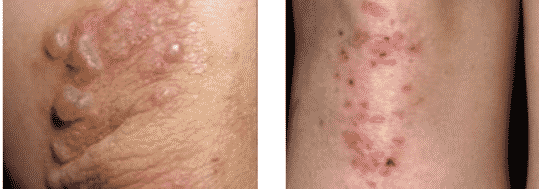
Dermatitis herpetiformis, also known as DH or Duhring’s disease is a chronic, intensely itchy, blistering skin condition which is also caused by an immune reaction to ingesting gluten. It may or may not be associated with other coeliac disease symptoms, but is linked to coeliac disease. The name herpetiformis is derived from the tendency for blisters to appear in clusters, resembling herpes simplex. However, dermatitis herpetiformis is not due to this viral infection. Everyone with DH also has coeliac disease.

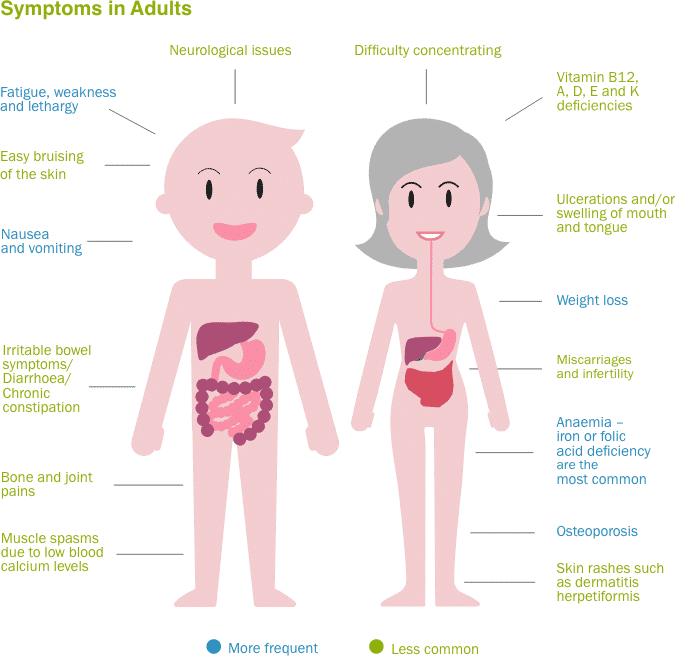
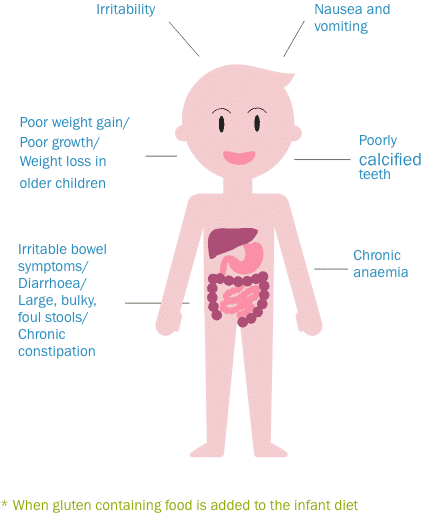
Symptoms of Coeliac Disease

What are the symptoms?

Dermatitis Herpeformis is a rash most commonly occurring on the elbows, knees, shoulders, buttocks, and face. It’s categorised as red, raised patches, often with blisters.
Diagnosis
Diagnosis is confirmed by a skin biopsy. A dermatologist takes a skin sample which is checked for the presence of an antibody called immunoglobulin A (lgA). If the antibody is found, this means the skin biopsy is positive and you should be referred to a gastroenterologist (gut specialist) for further testing. This is because of the link with coeliac disease.

Treatment

The treatment for DH is a life-long gluten free diet. Although this is effective in the long-term, it can take an average of two years for it to take full effect, so drug treatment may also be recommended to begin with. The most commonly prescribed drug for DH is Dapsone. This will help control the itching and development of blisters, although the rash will come back if you stop taking it before the gluten free diet has taken effect.

For further information, please download our pdf on Dermatitis Herpetiformis.

BECOME A MEMBER

  • Get advice, support, recipes and more throughout your coeliac journey
  • Become part of a lively and supportive community
  • Receive updates from medical professionals, manufacturers, and researchers
  • Gain access to our member only resources, support groups, kids’ clubs, special offers, and the Coeliac Link magazine
MEMBER PLANS

Does Dermatitis Herpeformis increase the risk of other diseases?

As with coeliac disease, DH is also associated with an increased risk of other autoimmune diseases such as thyroid disease or Type 1 diabetes. The complications that occur in coeliac disease can also occur in DH: these include osteoporosis and certain types of small bowel cancer. Once you have been following the gluten free diet for some time, the risk of osteoporosis is reduced and the risk of cancer becomes the same as someone who doesn’t have coeliac disease or dermatitis herpetiformis.

This information is for guidance only and should not replace advice given by your medical professional

Get Involved

Support your charity – the only not-for-profit supporting Kiwis with coeliac disease. Become part of Coeliac New Zealand now.

VOLUNTEER

Volunteering is a great way to grow your community and share your knowledge with others.
Find out how.

GET IN TOUCH

DONATE

Help us reach more people who are suffering from coeliac disease. Contribute to the greater good of your community.

MAKE A DONATION

FUNDRAISE

We are always on the look-out for passionate people interested in raising funds and building awareness about coeliac disease

GET IN TOUCH

TREATMENT

Coeliac disease is treated by a life-long gluten free diet. By specifically removing the cause of the disease, this treatment allows all abnormalities to recover completely. As long as the diet is adhered to strictly, patients can recover.

An initial few weeks on both a gluten/lactose free diet will allow the bowel lining to replace its 'lactase' enzyme quantities, which digest lactose sugar prior to absorption. This may take longer for some individuals than others.

GET
DIAGNOSED

Think you may be Coeliac. Find out what you need to do here

VIEW MORE

ONLINE ASSESSMENT

Not sure? Take our free and confidential self-assessment

VIEW MORE

About Coeliac New Zealand

Your partner in
healthy living

Coeliac New Zealand is available throughout your journey. As part of our community, you’ll get support, advice, and assistance. We work with health professionals, manufacturers, and researchers to raise awareness of coeliac disease in NZ.

Together, we can reach a day when every person with coeliac disease gets diagnosed quickly, lives a healthy life, and has the prospect of a cure.

Latest News

09/01/2026
Cilla shares her journey with coeliac disease

Shared experiences create a unique kind of connection that’s hard to replicate in any other way. Whether a diagnsois of coeliac disease is challenging or easy because others you know have been diagnosed before you, every individual's experience is unique.  This is Cilla's journey with coeliac disease.... I was diagnosed with coeliac disease over 20 […]

Read More
05/01/2026
Hayley shares her journey with coeliac disease

Shared experiences create a unique kind of connection that’s hard to replicate in any other way. Whether a diagnsois of coeliac disease is challenging or easy because others you know have been diagnosed before you, every individual's experience is unique.  For Hayley, it went like this... 2025 started off great. We had a busy season […]

Read More
16/12/2025
Digital Food Labelling Must Complement - Not Compromise - Food Safety

Coeliac New Zealand plays a vital role in advocating for people with coeliac disease by representing their needs at a national level and working to improve awareness, diagnosis, and support. Through ongoing engagement with government agencies, healthcare professionals, and the food industry, the organisation helps to ensure safer food labelling, better access to gluten-free options, […]

Read More
linkedin facebook pinterest youtube rss twitter instagram facebook-blank rss-blank linkedin-blank pinterest youtube twitter instagram

