


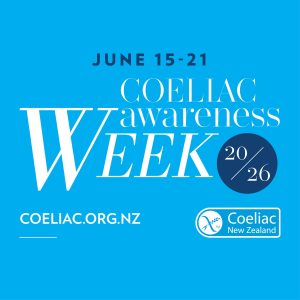

This June, Coeliac New Zealand is leading Coeliac Awareness Week (15 – 21 June 2026), calling for greater understanding of coeliac disease and earlier recognition, while offering practical support and resources to help Kiwis thrive gluten free.
Coeliac disease affects an estimated 100,000 New Zealanders, and can appear at any age, with around 30,000 children under the age of 18. Despite growing awareness of coeliac disease, research shows an estimated 50-80% of those affected in Western countries remain undiagnosed, often unaware they are living with the condition. Because symptoms vary so widely, diagnosis is often delayed for a decade or more.
Coeliac disease occurs when exposure to gluten, a protein found in wheat and several other grains, triggers an immune response. This reaction causes damage to the small bowel and can lead to a wide range of symptoms but most commonly abdominal pain, bloating, diarrhoea as well as brain fog and iron-deficiency anaemia. Persistent inflammation in the small bowel is also linked to a nearly fourfold increase in lymphoma in those who remain undiagnosed.
For many people, it can be difficult to recognise. Symptoms may vary widely between individuals ranging from mild to severe, which don’t always present as digestive issues. Some people may experience no obvious symptoms, despite having intestinal damage, while others live with unexplained chronic fatigue headaches, reduced fertility, and osteoporosis for years before receiving a diagnosis later in life, often after other symptoms have been investigated or treated.
Being diagnosed with coeliac disease can feel like a major turning point but is an important first step of feeling better and beginning a gluten-free diet. With the right mindset, testing, support and dietary changes, people with coeliac disease can go on to live healthy, full lives and thrive gluten free every day.
Coeliac New Zealand Board Member Katie Martin was diagnosed with coeliac disease over 10 years ago, along with one of her children. Having a child with the diagnosis adds an extra layer of anxiety around food requirements for the whole family. Coeliac New Zealand was part of the journey right from the start, helping with connection and community support.
"This year’s Coeliac Awareness Week theme of ‘Together we can thrive gluten free’ acknowledges the importance of building a strong support system of friends, family, and colleagues to be able to thrive while eating gluten free,” shares Katie. “It also highlights the need for greater empathy in everyday situations. Everyone can play a role, whether by educating themselves, checking ingredients more carefully, or simply being mindful of cross-contamination when preparing gluten free recipes or sharing food."
Whether you are newly diagnosed or simply need a gentle reset, these seven gluten-free habits can guide you toward feeling your best and truly thriving with coeliac disease. Establishing positive daily routines is a proactive choice to protect your long-term health.
If you think you might be at risk of coeliac disease, take the online self-assessment and talk to a health professional to get diagnosed.
The free Coeliac Awareness Week 2026 Cookbook: Thrive Gluten Free, Real Food for Real Families is now available to download providing a range of delicious fuss-free gluten free recipes to help plan your week.
For more information on Coeliac Awareness Week 2026, or to learn more about coeliac disease and support available, please visit www.coeliac.org.nz.
A huge thank you to Coeliac Awareness Week’s 2026 industry supporters, including our Platinum Partner - Arnott's , Platinum Sponsors: Ploughmans Bakery, FreshLife Food, Lee Kum Kee, My Food Bag, NZ Bakels, Sunbeam and Gold Sponsors: Marcels, Allergywise, O’Brien GF Beer and Eat Choice
